Australia
United States
International



SKDA Moto Creative founder details ascent to the sport’s pinnacle.
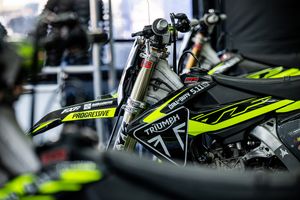
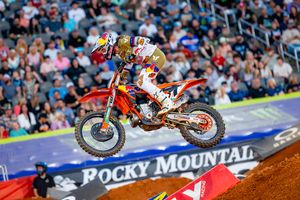
What started as an idea from Sam Morton as an ambitious teenager over 15 years ago has transformed into SKDA becoming a leader in motorcycle graphics and design, now collaborating with some of the very highest-profile race teams and riders on a global scale. In this Industry interview, MotoOnline gets the story behind the brand, as well as its newfound association with Honda HRC Progressive in the US, and his future aspirations.

Image: Supplied.
Sam, thanks for taking the time to talk. From the outside looking in, what you’ve created in SKDA is super-impressive and really cool. Can you take me through the journey to date?
Yeah, I appreciate that! It’s been gnarly, dude, really. It’s been crazy. 16 years ago, I started the brand as an idea, and it’s been 10 years since it became my full-time job or more, and it’s just never really stopped. It’s been insane. I’ve just worked my butt off, I suppose. At the end of the day, that really is what it comes down to. I stayed super focused, didn’t deviate, and just worked my ass off to get it to where I wanted it to be.
Was there a defining moment where you believed that the brand had real legs and could turn into what we see today?
Not really, because the fact is that – I mean, mostly naively – I always just sort of knew, or I suppose told myself, that I believed it would get to wherever it was I wanted it to get to, like I was not going to rest unless I got to that point, you know? And I still feel that way. I don’t really feel done. I just like, I know now, because of nothing other than my track record, that if I put my head down and work my absolute butt off and be clever along the way, good things can eventuate. I didn’t have a timeline on it, which meant there was no… there’s no chance of failure, really. It’s just continue pushing until you achieve what you want to achieve, and then set the next goal and keep going. So there didn’t feel like ever a specific, click moment. It was a continuation of things that led to where we are now.
What about the development of the brand? You’ve had some really neat integrations throughout the journey, which has landed at the Honda HRC Progressive team now – and that is massive – but how important was the development of the brand?
Yeah, so the brand is massively, massively important to me. I’ve put a lot of time and effort into focusing on that, and the brand itself is exactly what I personally want it to be. It’s not like I’m trying to pitch a brand to sell to an audience. It is, ‘What would I want it to be ideally?’ and I just focus on that, which means it becomes quite easy and natural to make decisions because I don’t have to consider the demographic as much as I just consider what I personally want it to be, and that seems to be what the demographic also wants, right? But then with that in mind, I’m super-careful – especially nowadays – with who we partner with, and every little piece of content that goes up, goes through a strict set of checks and guidelines and so on. All we really have to protect ourselves from the industry is the brand, which is why, you know, as you said, these partnerships and alignments we take are as important as the 10 that we don’t, you know, to keep the brand positioned where we need it to, to sort of maintain the presence.
Brand awareness is so important, and I feel from a marketing standpoint, there is often too much emphasis on the ones and zeroes because it’s tangible. But investing in the brand itself, I think, gets overlooked too often, because the return may not look great on a spreadsheet…
100 percent. For me personally, dude, I mean, I’m sure you’ve heard the story before, but I’ve never been chasing dollars, like it’s not and it never has been about that, and it never will be that. Like obviously if you do well in business, then dollars come, and that’s convenient to make life fun, but at the end of the day, that’s not what I’m doing it for. What I’m doing is, I’m trying to make an awesome thing that the industry can appreciate and gives me a platform to work with the biggest riders and best brands in the world, and that’s what I want to do – that’s all I want to do. If an opportunity came at us where I could make an extra million dollars clean profit, but the brand alignment might decrease the value of our brand because it’s a silly joke or whatever, we’re not going to play. I’m not interested. The brand is worth more to me than $100 million. And I think that with that mindset, it makes those decisions super, super-straightforward. And it means that keeping the brand at the forefront and a valuable thing, again, becomes somewhat subconscious, you know?

Image: Supplied.
Recently, the big one was taking on Honda HRC Progressive, which is another huge milestone for the business. Can you talk about how that came about, and the magnitude of such a thing?
That’s been massive. Like absolutely massive – I really can’t word it right. It is the absolute pinnacle of the sport, in my opinion. Therefore, [it is] my absolute wildest dream of everything I could ever achieve, like working with the number one riders in the world and arguably the number one team from a professionalism point of view. It’s unreal. It’s exactly what I would dream of. I’d swap my house 10 times over for the opportunity. It’s taken a while. Like, all these big deals take a long time. There are a lot of layers to them, there are a lot of considerations, there’s a lot of people, relationship building, and all that sort of stuff that comes into it – trust and all that sort of thing, but I mean, I’ve just been working at it for a long time. We got close to working with them a few years ago and it didn’t quite come through. I kept my finger on the pulse, kept pushing, tried to find other angles to make it happen. And yeah, this time I was able to, we were able to align on the things that we needed to, and I could create opportunities that they needed to make it happen, and yeah, I mean, I genuinely couldn’t be happier, like it’s absolutely unbelievable from where I’m standing.
What is the process of first earning their trust and then getting the deal over the line?
So, I mean, you have to have brand credibility and awareness to even get a seat at the table. Like, if you don’t have that… if for any reason they have even one percent concern about the quality of your product or the quality of your brand, you just won’t get anywhere near the table. So that stuff is sort of looked after before you even get the seat, because again, you wouldn’t be there without it. Colours and templates, cuts and materials, like again, they just, it’s assumed that if your brand is in a position to have the conversation with them, that sort of stuff’s taken care of, right? So it becomes more about the negotiations, like what can you offer them? And it’s not just about graphics kits. What services can you offer them? What sort of supply can you keep up with? What sort of financial contributions can you make towards their programs? What relationships do you have with the relevant people in the right places? One of the tricky things we’ve found with getting into the US, and even nowadays, like, you know, trying to sign these high-level teams, is the fact that I am not based there. I’m in Australia – I live in Adelaide. So that is always a hesitation they have, you know, like ‘Oh, what if we need something quick? What if we need to talk to you? What if you need to make an adjustment?’ That always becomes a tricky part of it, so there are specific sorts of tactics and investments and things that I can make from my side to get rid of those hesitations. It’s quite complex, I think, to make these things happen. But yeah, I mean, the result is that if you line it all up, you can make some cool stuff together.
For these big teams, what is the supply like for them, say, across a season of racing?
In terms of literal product, a normal race team will use between 300 and 500 sets of graphics a year, and then maybe between 150 and 250 seat covers, but that’s completely insignificant. You know, like that is borderline irrelevant when it comes to the size of the actual deal. Again, there are direct and indirect financial contributions that happen in either direction. There are partners with programs that sit alongside them, like their amateur programs or their own side companies. Pro Honda, for example, is a company within Honda. We will likely supply and work with them. We work with the team, for example. There’s so much that happens that is required to keep up with a deal beyond just printing a couple of hundred kits. And I think that’s where it becomes important, again, for them to have full faith in an organisation like us to make that leap. Like, it’s all well and good to say, ‘Yeah, yeah, I can afford to send you 100 kits,’ but keeping up with that in reality, with all the design that happens with it, with the customer service that happens within it, like, that’s when it gets quite gnarly and hard to keep up with. So, yeah, that’s the sort of stuff we have to try and find a way to convince them that we can handle and we can keep up with.

Image: Supplied.
On the design side, these teams have so many logos that have different philosophies and placements, and so, when it comes to actually designing the kits, is there a ton of design that goes into it nowadays, having to balance all of those logos?
It is tricky, but I enjoy that. It seems enjoyable to have it difficult – if it were super-easy and we could do whatever we wanted, it would almost become too simple… we probably wouldn’t get a good result. These teams – like you said – have a lot of restrictions and a lot of requirements and a lot of variations that you have to cater to, which makes it so that it’s actually difficult to make the bike look beautiful. But that’s what makes it fun. Again, we are good at design, I am proud of our design team and what we can achieve, so having those restrictions paired with our team can result in a good product, and I think that’s something we can stand proud of. But again, the design thing is complex too. As I mentioned to you earlier, the design of the bike is the easy part, right? The collateral stuff that you work on. We design the trucks. We design the headphone stickers. We design the posters for the team. There are so many other elements that need to tie together and create perfect synchrony beyond the bike itself.
I saw that the Deus Ex Machina stuff you did, and that’s almost in a different world. I feel, from a creative standpoint, and then representing dirt bikes in a bit of a different way. So the race team stuff is all endemic, but are you looking at those other opportunities as well?
Yeah, man, for sure. And I mean, that’s a brand alignment piece, right? Deus… I love that brand and always have. I just think they’re wicked and love what they’re about. So we had an opportunity a few years ago to do a tiny project with them – it was a paid print job. Somehow, they came to us to do that and I grabbed it with two hands, you know, like I put a bunch of effort into meeting the people in the organisation. I tried to make friends with them whenever I visited them, asking about what they were doing, like really just worked on building relationships there to get to the point where me making a suggestion that we do a project together seemed almost, like, obvious. We put it together and made it happen, and yeah, like that – alongside HRC – for me, that was one of the biggest and most amazing opportunities and projects I’ve worked on because again, I’ve idolized that brand my entire life. My wardrobe’s full of the stuff I just think what they do is amazing, so you know, from a commercial perspective, working with them sort of aligns us with their ethos and proves that we have a similar intent, which I feel that we do, in an appreciation for motorcycles, art, and creativity and expression. I think that works really well, and again, it lifts us. I want to work with these brands that are in a premium space, doing things at a high level, and it just sort of gives us the right representation. So I’ll continue to look at those opportunities and be super, super selective about which ones I do and don’t get involved with. But yeah, man, I mean, I’m going to continue doing that stuff.
What is next for you? You’ve ticked off a lot of things within the business. What are you eyeing now?
Yeah, it’s a good question. And to be honest, it’s something that I’m aware of within myself, but I’m quite happy sitting in a spot where I don’t know exactly what the answer is to that yet. Like, as you said, this is sort of the goal, right? This was the pinnacle from day one. If you’d asked me when I started when I was 18 what my ultimate goal would be, I probably would have said something like the Honda deal and where we are now. I’ve always sort of said [the goal] was to work with the biggest and best riders and brands in the world. I mean, we’ve ticked that, as you said. So it’s an unreal spot, but I don’t feel lost or scared by that. It just feels super-nice. Now I want to work on maximising the potential of this deal and creating some amazing looks with the Lawrence brothers and with factory Honda, and whatever other opportunities come with that. I want to put a bunch of effort into really soaking that up and making it commercially as viable as possible, but also personally as satisfying as possible. Like just enjoy it, and then there’s so much that’s going to flow on from this. We’ve been doing a lot of work in street bikes lately, like who knows where that could lead if we lean into it harder, and the collaboration with Triumph, KTM, and Honda, these partnerships that we have all continuously surprise me with new things that pop up. So I think just continuing exactly what I’m doing will bring me to some more pretty crazy things that perhaps I haven’t even considered yet, and that’s a pretty exciting position to be sitting in.
Yeah, that’s awesome. As I said, what you have achieved so far has been really impressive, and is a legitimate brand that holds a space and credibility within the industry. Seeing it continually evolve is exciting.
Yeah, I appreciate that, dude. Straight up, I say this to people when they ask for business advice, but I don’t think I’m anything special. I think the single thing I know I did that worked for me, looking back, is something that can be replicated by other people, which is having an undeniable focus. Looking at us now, we’ve got a design team, we’ve got a marketing team, we’ve got printing equipment, we could do anything, you know, we could do real estate signs, we could do jet-ski graphics or whatever it is, but for me, my personal interest, my personal desire is making motorcycles look amazing, that’s what I love to do personally, and I’ve just never let myself deviate from that. Opportunities have come up, sometimes profitable, whatever, but I’ve sort of stuck to that path of like, ‘No, this is all I’m interested in, this is all I want to do.’ The money won’t deviate [me] – I think that that’s the secret sauce, you know, being hyper-focused is how you can make something like this go ahead.