Australia
United States
International



MotoOnline.com reviews the new 2027 Honda CRF450R.
Words: Caleb Tennant
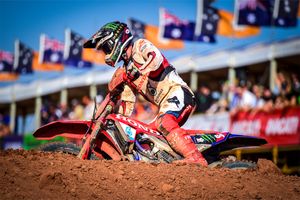
Honda has engineered an entirely new CRF450R for 2027, building upon the outgoing model and aiming to further advance in the category. MotoOnline was on location for the press introduction at Spring Creek to ride the new generation platform, experiencing the changes first-hand for this Tested review.
It was a significant opportunity to ride the 2027 Honda CRF450R at such an iconic track, where Honda also brought the previous version along so we were able to test the two bikes against each other and get a proper understanding of the upgrades. Before riding, we had the chance to learn how the new motorcycle came about, what had changed, and the reasoning behind those decisions. Detailed has more information on the bike’s technical features.
What stood out was how much effort Honda has put into engineering a whole new CRF450R – almost 10 pounds lighter and with around 12 percent more power – when the previous bike is still obviously really competitive. The engineers responsible for the engine and chassis were in attendance at Millville from Japan, and it was clear how passionate and excited everyone was about this finished product.

Image: Supplied.
Honda’s production and factory racing departments appear to work incredibly closely. They have taken the positive elements from the factory machinery and worked to incorporate those qualities into the production bike, creating the best possible platform straight out of the box. Even in the finer details, it didn’t seem as though Honda was willing to cut costs if a component could improve the overall package.
Spring Creek was also an ideal venue to properly assess the bike. We had the entire facility to ourselves, starting the day on a perfectly prepared track before it became increasingly rough. That allowed us to make our own lines, dial things in and test the motorcycle without the chaos of a busy public track.
When I first climbed onto the 2027 CRF450R, it did take me a little while to become comfortable. The track was slick and sticky early in the morning, with soft, wet dirt, so the opening session was difficult to judge immediately. As I began to settle in, however, the biggest characteristic became clear – Honda has worked heavily on keeping the bike stable and balanced.
It sticks to the ground incredibly well, even though it is lighter. Initially I felt like I had to manipulate it slightly more when placing it into corners, whereas the previous model was easier to quickly move from left to right, pivot and drop into a turn, but that agility could also come with instability when pushing in certain conditions.
The new bike tracks so consistently that it doesn’t twitch or become upset by small bumps. Because it remains so stable, I needed to be more deliberate with where I placed it and what I wanted it to do. Once I took a few laps to experiment with weight distribution and different lean angles, my trust in the motorcycle continued to grow.
By the end of the day, I was extremely comfortable. It reminded me that there is a correct way to ride any motorcycle, regardless of your ability. The more patient I became and the more I concentrated on technique, throttle control and allowing the motorcycle to flow, the better this CRF450R became. When you put those elements together, the bike is unbelievable, because the more you ride it in that smooth and technically correct way, the more performance you get from it.
The first major highlight for me was the amount of rear-wheel traction. Honda has changed the swingarm, its internal components and the ergonomics of the motorcycle, and I was surprised by how firmly the rear wheel remained connected to the ground.
That is especially important on a 450. When a motorcycle begins jumping around and kicking from bumps, the rider uses more energy. Any time the tyre is off the ground, you aren’t driving forward, and there is another reaction when it reconnects with the surface. The stability of the rear end allowed the bike to remain straight through rough sections, which built a lot of confidence.

Image: Supplied.
The engine was another standout. Honda has made the bike faster, but also quieter, with almost no vibration coming through the rider’s hands. That allows you to feel more connected to the motorcycle.
There was a noticeable difference in how strongly the new bike pulled through each gear, particularly on the hills and between jumps at Spring Creek. I could often ride one gear higher and avoid shifting as frequently. Where I may have landed in third gear and shifted into fourth on the previous model, I could land in fourth on the new bike and allow it to pull.
That long and consistent power delivery brings stability and confidence. The more a bike moves around through the rev range and requires shifting, the more it can become unsettled. The new engine doesn’t feel aggressive, but it has so much pull that you can carry a lot of momentum.
I never considered the previous CRF450R slow, so it wasn’t necessarily about searching for additional peak power – the improvement is in how the power is delivered, how long it pulls through the gears and how little shifting is required. It has more than enough performance, but the delivery remains smooth and usable.
The bike also feels far less bound up. On the previous model, when you rolled off the throttle, there was more resistance. The new machine carries much more roll speed and doesn’t have as much engine braking, so it continues flowing forward when you shut the throttle. That free-moving sensation adds to the overall smoothness of the motorcycle.
At the beginning of the test, I was probably overriding slightly – entering corners too quickly, braking late and becoming abrupt when applying the throttle. Those actions appeared to upset the chassis, so I changed my approach, slowed everything down and concentrated on being more consistent and smooth. The better I did that, the better the bike worked.
We also made several small suspension adjustments. We softened the fork by one click, changed the high-speed compression slightly and experimented with the ride height. What impressed me was how noticeable each adjustment was.
At one point, increasing the ride height helped the bike hold up incredibly well through rollers and deeper sections, but I then found it more difficult to lean into tighter corners. We lowered it again and found a better balance. It responds clearly to small changes, allowing it to be tailored to the rider and the track without moving far away from the strong standard base.
There wasn’t much I would immediately change. It simply took time to adapt because the motorcycle doesn’t move around as much from side to side or up and down. You need to be slightly more deliberate and one step ahead when deciding where you want to place it, particularly when riding at speed.

Image: Supplied.
The ergonomics also contribute to the improved balance. The footpeg position has been moved slightly back, helping place more weight and traction over the back of the motorcycle. The area where the rider sits is also a little wider than the previous model, making it easier to grip the bike with your legs and thighs. That provides a stronger connection with the motorcycle and greater control when steering it.
I also believe this package will translate well across a variety of surfaces and conditions. The test took place in excellent conditions, but smooth power, strong rear-wheel traction and a stable, balanced chassis are qualities that should work anywhere.
The front-end now holds itself higher through the initial part of the stroke rather than collapsing quickly before becoming firmer. That reduces unnecessary movement and helps the bike remain on top of the surface. When you begin with such a balanced base, only minor adjustments should be needed from one track to another.
Honda’s three engine maps were also noticeably different. The smoother map would work well on a smaller track or when concentrating on technique without opening the bike up completely. The standard map was consistent and comfortable, while the aggressive setting provided the additional torque needed for Millville’s long up-hills.
I spent most of the time switching between the standard and aggressive maps. Even in the higher setting, the power didn’t become overpowering and retained its consistent delivery.
Honda has also made a significant improvement to the launch control. The previous system could occasionally feel inconsistent or jerky, but the updated version sits more naturally within the ideal range. Even Trey Canard – now a development rider at Honda and HRC – said he would use the production launch control if he were racing the CRF, which says a lot about how effective it has become.
By the end of the test, the 2027 CRF450R had definitely met my expectations. It is one of those motorcycles that feels so smooth and comfortable that you don’t realise how quickly you are moving. When I watched the footage afterwards, I couldn’t believe the speed I was carrying because it had felt so controlled from the rider’s perspective.
It took me a couple of sessions to fully understand the new Honda’s revised character, particularly how to work with its stability through corners, but once I adapted and concentrated on riding smoothly, the package continued to work beneath me, as designed. Honda hasn’t simply made changes for the sake of it – the 2027 CRF450R feels like a purposefully developed step forward.


Engine type: 450cc liquid-cooled single-cylinder four-stroke
Bore/stroke: 97.0mm x 60.8mm
Compression ratio: 13.8:1
Transmission: Close-ratio five-speed
Starter: Electric
Clutch: Nissin hydraulic
Traction control: Yes
Launch control: Yes
Front suspension: 49mm Showa spring fork
Rear suspension: Pro-Link Showa shock
Front brake: Nissin single 260mm disc with twin-piston caliper
Rear brake: Nissin single 240mm disc
Tires: Dunlop Geomax MX34
Weight: 249 pounds (wet)
Price: $10,099 MSRP (USA)
Availability: October 2026
Further information: powersports.honda.com