Australia
United States
International



Former 250SX champion opens up about TLD Ducati Desmo 450MX.
Switching brands ahead of a new season is never easy – learning a new bike, dialing in the setup, adapting to the rider triangle, and an unfamiliar chassis. That’s exactly the challenge Dylan Ferrandis faces as Monster Energy Supercross 2026 kicks off this weekend, only this time there’s no data to fall back on. In this Check In feature, the Frenchman opens up on his move to TLD Red Bull Ducati and what lies ahead.

Image: Supplied.
An obvious one to start – you loved the Honda, now you’re on this Ducati. I know it’s early, but can you compare the two bikes for us?
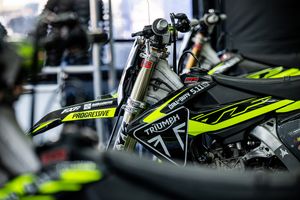
I would say the Ducati’s strongest point is that they fixed the only thing I didn’t like on the Honda, which makes the Ducati way better for me. The chassis – I think with the Honda, since day one, I was fighting some flexing. The frame is very soft. With the Ducati bike, I think that’s what we have been working on the most – the frame. They designed a frame that is, to me, the best frame in two-wheel motorsports. They understand that this is a bigger problem, especially in Supercross, when we have flexing on the landings of jumps or when we apply so much g-force to the bike. I think they understand that better than any other team or brand. That’s the strongest point of the bike, and it’s what I love about it. The chassis is insane – it’s so balanced and perfect. I know everyone is going to sit in this seat and say they have the best bike, but most of the time, I don’t lie to you guys. This bike and frame really fixed what I was struggling with on the Honda. Obviously, at HRC they fixed that problem, but at Phoenix we didn’t have enough resources to fix that. This Ducati bike really matches what I was looking for, for years, as a chassis and as a frame for a Supercross bike.
Did you find the transition fairly seamless, or were there some things you had to work on when moving over to the new bike?
We definitely had stuff to work on. On day one, I could not ride the bike. We didn’t understand it – I wasn’t able to triple or really ride the bike properly. It ended up being the height of the footpegs. It’s different on the Ducati than on any other bike, and it was killing me. I couldn’t ride the bike. After testing some things, we understood that was the issue. They have stuff that’s very different from any other brand – things that are great, like the engine and the chassis – but other things like the peg position, shifter, and brakes were very different, and I was struggling early on. Now it’s been two months and we’ve tested a lot of things. The team knows me – it’s pretty much the full Factory Connection and Geico team. I had a lot of these guys with me at Phoenix, so they know what I’m looking for. It’s been a very easy transition, but obviously in Supercross nobody had ridden this bike before, so we had to try the bike, try the parts, give feedback, and build parts for the bike. That took a little bit. Right now, we’re in a pretty good place. Everything I was complaining about is fixed, or we’re right in the sweet spot.
Do you think you can go into Supercross with normal expectations, or is the bike not going to be ready to do top fives or similar results to what you achieved on the Honda?
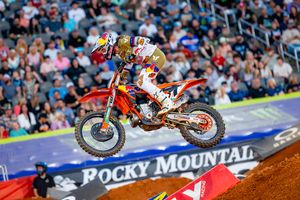
After my last two seasons, my expectations and goals weren’t too high. That was mostly because I had health issues and my fitness wasn’t good. The Honda was a great bike, but I wasn’t able to match the speed I had in the past, so my expectations were lower as a result. Since I started riding the Ducati and working with the team, every time they give me an upgrade, my motivation and expectations grow. With the bike we have, there’s no excuse – on a good day, when I execute everything the best I can, I’m sure podiums are possible. This bike gives me confidence that we can make the podium. I don’t know about the first race because everything will be new and we might need time to learn, especially with starts and racing situations. But the way I feel at the practice track, the way the bike reacts in the whoops, when the track is watered, when there’s not much traction, or when it’s soft in the morning – I really think we’re capable of getting podiums. That’s what motivates me.

Image: Supplied.
You’ve spoken a lot about the chassis, but what about the Desmo engine characteristics – what’s that been like in Supercross trim so far?
If anybody follows MotoGP, you see what Ducati does there – they go fast on the straightaways and try to keep momentum through the turns. That’s basically how the Ducati engine is. It doesn’t naturally match the stop-and-go Supercross style, so we had to do a lot of testing. They’ve really brought that MotoGP style into the dirt bike. It’s not exactly what we need for Supercross, but with the team, we tested a lot and figured out how to make it work. I think it’s going to be great – we’re going to have a lot of power.
Ducati is well known for its electronics in MotoGP and WorldSBK. Have you experienced anything out of the ordinary on the dirt bike?
Not yet. In Supercross, the bike is new and nobody has ridden it in Supercross trim yet. The team really wanted to start from scratch with a stock engine. We started with everything stock and just did the suspension. I wanted to see how the bike reacted, collect data, and learn the bike step-by-step. We have a really good base, but we don’t have much going on with electronics yet, so I can’t really answer that.
You mentioned the footpegs earlier – the bike has clearly come a long way. Are you race-ready now, or is there still more to gain over the next four weeks?
I think we’re close to being ready. Last week I spent every day at the track from 9am to 5pm, trying a lot of parts and learning a lot. We ended up finding exactly what we were looking for. Now it’s more about the small stuff – improving the forks a little bit, making sure the bike is good for starts in every condition, whether it’s cold, hot, or soft. We already have the base, and it’s strong enough. Over the next four weeks leading into A1, we’ll just fine-tune. For A1 we’ll probably still be testing a little bit, but by San Diego, I think we’ll be fully ready.
Does this feel like a full factory team, similar to Yamaha or Kawasaki in Europe, where you have a lot of parts, options, and resources to test?
I’ve never really been on a true factory team before. Every team I’ve been with had factory support, but not a full factory team – Star Racing wasn’t, Phoenix wasn’t, and even Kawasaki in Europe wasn’t. This is my first real factory ride. That said, I’m not going to lie – we’ve kind of run out of parts at times. It’s been difficult for the team to get parts and send them to the US, so we’ve struggled a little there. But so far it hasn’t been a big issue.

Image: Supplied.
Are there things you’ve been waiting to test but haven’t been able to yet?
There were, but last week we finally had everything. We got the full package and tried what we wanted to try. Before that, we were waiting on parts a bit.
Zigi has done your suspension for a long time – is that almost the least of your worries, given he knows exactly what you like?
Yes, I would say so. Suspension these days isn’t too difficult. What’s difficult is getting the chassis to work in these crazy Supercross conditions. That’s the most important thing. A lot of times, we try to fix bike problems with suspension. Sometimes it works, sometimes it doesn’t. When the base of the bike – the frame and chassis – is good, suspension is pretty easy to dial in. They sent me a suspension setup early on and I haven’t changed it since. It’s been the same base, and we haven’t really tested suspension yet because we don’t need to.
What’s the relationship been like with Justin Barcia?
I mean, [laughs]. We’ve had our history – that’s in the past. When I see him at the track, I’ve been polite. We exchange feedback with the team and give direction, and we’ve had no problems talking or riding a little bit together. The problem with Justin is race time. I’ve heard he’s a very nice person out of his helmet, but when he puts the helmet on at a race, it’s a different guy. So we’ll see how it goes when the gate drops.